Basic Concepts and Structure
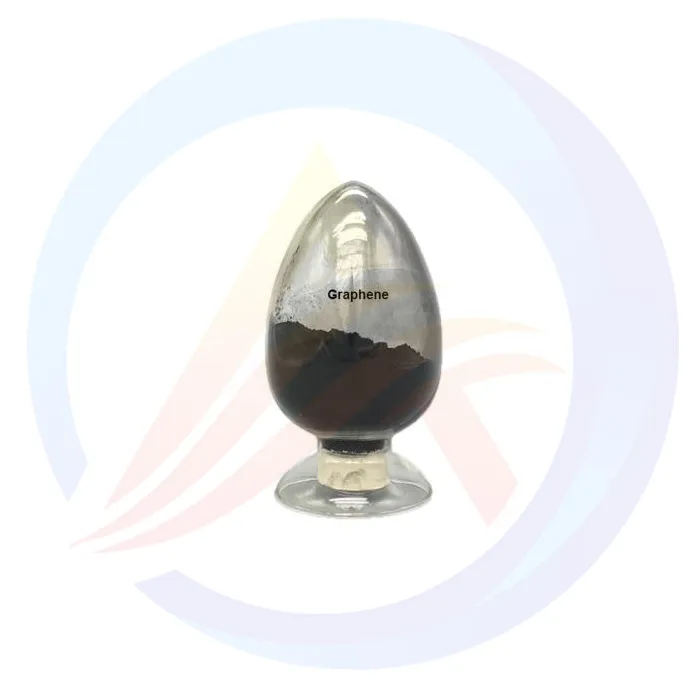
Single-layer graphene oxide can be understood as a two-dimensional material obtained by exfoliating graphite treated with strong oxidants. It introduces abundant oxygen-containing functional groups (such as hydroxyl, epoxy, and carboxyl groups) onto the carbon framework of graphene. These groups disrupt the original conjugated conductive structure but impart extreme hydrophilicity, enabling easy dispersion in water or polar solvents, which facilitates subsequent processing and functional modification.
Main features and applications
Its characteristics are closely related to applications, as follows:
1. High specific surface area and surface activity
Characteristics: The layered structure gives it a huge specific surface area, and the surface is rich in reactive oxygen-containing functional groups.
Application: It is an excellent electrode material substrate or additive. In lithium batteries or supercapacitors, it can provide more active sites, which is conducive to rapid ion adsorption and transport, thereby improving rate performance and capacity.
2. Excellent solution processability
Characteristics: Easy to peel off in water or polar solvents to form a stable and uniform dispersion (i.e. "graphene oxide dispersion").
Application: It can be used as "artificial ink" to prepare various functional thin films (such as thermal conductive films, flexible conductive coatings), or uniformly composite into other materials through wet processes.
3. Easy to functionalize and modify
Characteristic: The functional groups on the surface can act as "handles" for chemical reactions, grafting other molecules or polymers through covalent or non covalent bonds.
Application: Customizable to endow materials with specific properties, such as enhancing compatibility with polymers, introducing magnetic or optical properties, for high-performance composite materials, biosensors, or drug carriers.
4. Can be used as a precursor for preparing graphene
Characteristics: By chemical reduction, thermal reduction and other methods, oxygen-containing functional groups can be partially or completely removed, conductivity can be restored, and "reduced graphene oxide" can be obtained.
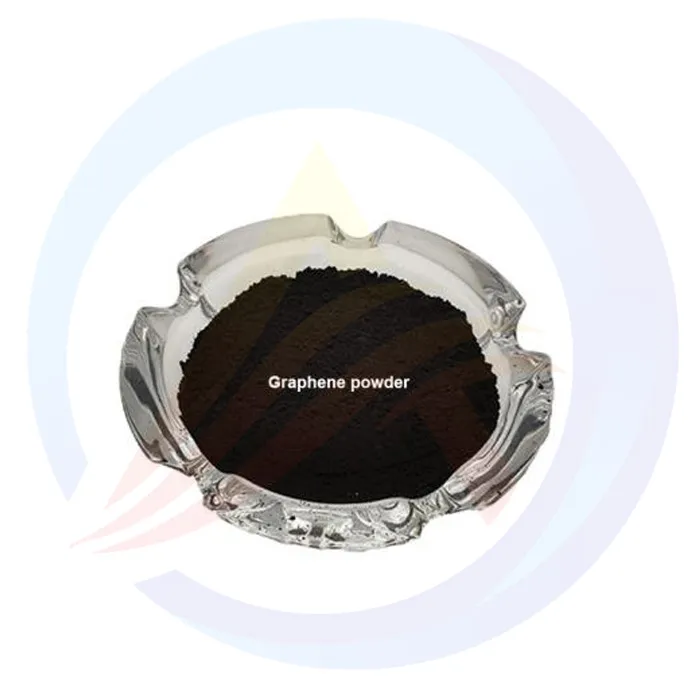
Application: This is currently one of the mainstream routes for large-scale preparation of graphene materials, and the resulting products are widely used in fields such as conductive inks, electromagnetic shielding, and anti-static coatings.
Preparation methods and advantages and disadvantages
The mainstream preparation method: Currently, the most commonly used method is the improved Hummers method and its derivative methods, which treat graphite raw materials with oxidants such as sulfuric acid and potassium permanganate, and then obtain them through peeling, cleaning, and drying.
Main advantages: good processability, lower cost compared to pure graphene, easy to modify and composite, stable dispersion.
Main disadvantages: The oxidation process introduces a large number of defects, resulting in significantly lower conductivity and mechanical properties compared to perfect graphene; Controlling product consistency, such as layer size and degree of oxidation, is a challenge in the industry.
Major battery applications
The application of this product in the battery field is mainly reflected in the following three aspects:
Efficient charge and discharge: As an electrode material, its high specific surface area and excellent conductivity can enhance the transmission speed of lithium ions and electrons.
Enhance battery performance: When used as an anode material or cathode material for supercapacitors, it can extend battery lifespan and improve energy and power density.
Electrolyte additive: Added in the form of nanocomposites, it can improve battery capacity, cycling performance, and safety.
Multifunctional composite materials: easy to modify, can be combined with other materials, and endow the composites with properties such as conductivity, thermal conductivity, and reinforcement.