

1. Basic Characteristics of Metal Foams
Metal foams are lightweight, open-cell porous metals with a continuous three-dimensional (3D) interconnected network and high porosity (90%–98%). The most widely used types for batteries are nickel foam and copper foam, along with aluminum, titanium and iron foam for special scenarios. Compared with traditional flat metal foils, they feature ultra-large specific surface area, excellent electrical conductivity, strong mechanical buffer capacity and unobstructed fluid channels for electrolytes. These structural merits make them ideal current collectors and electrode scaffolds for various battery systems.
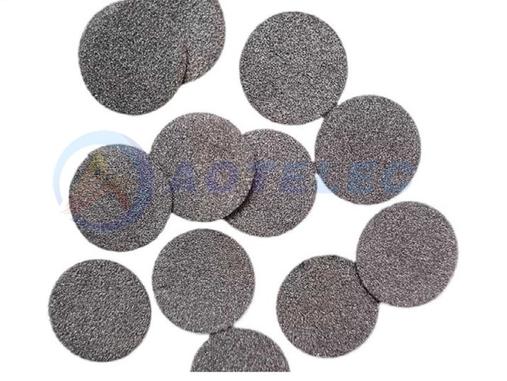
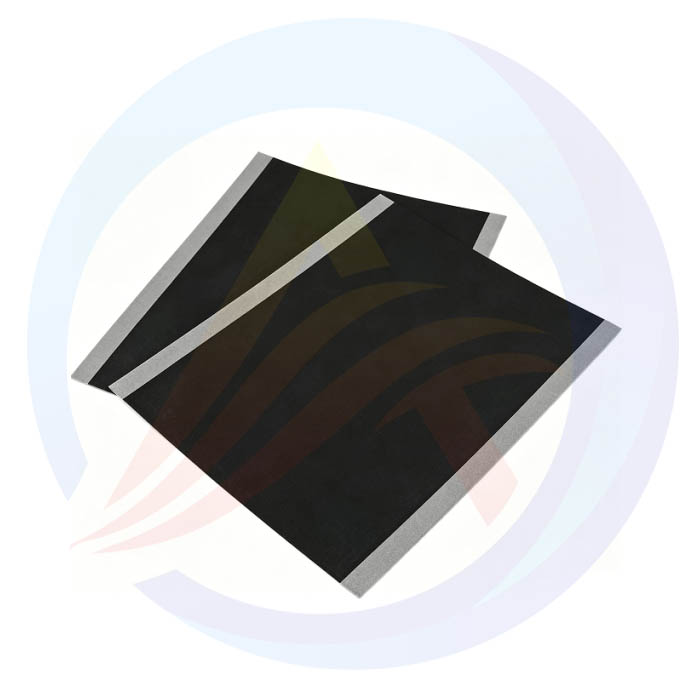
Nickel Foam Sheet
2. Core Working Principle in Battery Electrodes
Metal foam mainly acts as a 3D conductive current collector framework inside batteries, supporting the whole charge-discharge electrochemical cycle through four core mechanisms:
Fast electron conduction network The interwoven metal skeleton forms an omnidirectional conductive path. Electrons generated by redox reactions of active materials can transfer to the tab rapidly, cutting internal ohmic resistance and supporting high-rate fast charging. Unlike flat foils that only conduct electrons on one plane, foam realizes full-volume electron transmission.
Unrestricted ion transport channel Open and communicating pores allow electrolyte to fully infiltrate the electrode interior. Lithium ions, hydrogen ions and other charge carriers diffuse to every active material particle without dead zones, accelerating reaction kinetics and raising discharge power density.
Volume expansion buffer space High-capacity active materials (silicon, tin, lithium metal) expand sharply when embedding ions and shrink during de-embedding, easily pulverizing and peeling off from flat foil substrates. The foam’s internal voids reserve buffer space to absorb volume strain, maintaining tight contact between active materials and the conductive frame, greatly extending cycle life.
Efficient heat dissipation & safety improvement The porous metal network expands heat exchange area and accelerates heat transfer during high-current operation, lowering local hotspots. It also inhibits lithium dendrite piercing the separator, reducing risks of short circuit and thermal runaway.
3. Main Applications in Different Battery Systems
3.1 Lithium-ion Batteries (LIBs)
Copper foam for anodes: Replace traditional copper foil as anode current collector. It loads graphite, silicon or tin-based active materials. The 3D structure stabilizes high-volume-expansion silicon anodes and suppresses lithium dendrites for lithium metal anodes in solid-state batteries; meanwhile, less copper material is used to lift battery energy density.
Nickel foam for cathodes: Used as the substrate of LFP, NCM and other cathode materials in lab and high-power prototypes. Its oxidation resistance in alkaline/weak oxidizing environments guarantees stable long-cycle performance.
3.2 Nickel-Metal Hydride (NiMH) Batteries
Nickel foam is the mainstream cathode substrate for commercial NiMH cells. Nickel hydroxide active materials are coated on foam pores; abundant surface sites boost hydrogen ion adsorption and desorption, achieving high discharge power for power tools and hybrid vehicles.
3.3 Supercapacitors
Nickel and aluminum foams serve as electrode skeletons loaded with activated carbon, graphene or metal oxide pseudocapacitive materials. The huge surface area multiplies charge storage interfaces, realizing ultra-high power density and ultrafast charge within seconds.
3.4 Special Battery Types
Thermal batteries: Iron/nickel foam acts as cathode conductive frame to enhance active material utilization and discharge capacity.
Flow batteries: Metal foam serves as flow field and electrode substrate to homogenize electrolyte flow and reduce mass transfer loss.
Battery thermal management composite frames: Iron/nickel foam embedded in phase-change materials improves thermal conductivity and blocks thermal runaway spread between cells.
4. Advantages Over Traditional Flat Foils
Larger electrochemical reaction surface area, higher active material loading capacity
Accelerated ion and electron transmission, excellent fast-charging performance
Built-in buffer voids to solve volume expansion failure of high-capacity electrodes
Superior heat dissipation and improved cell safety
Lightweight structure to increase system energy density
Metal foams have become a critical supporting material for next-generation high-energy, high-power and long-cycle batteries, with broad industrialization prospects in electric vehicles, energy storage and portable electronics.