
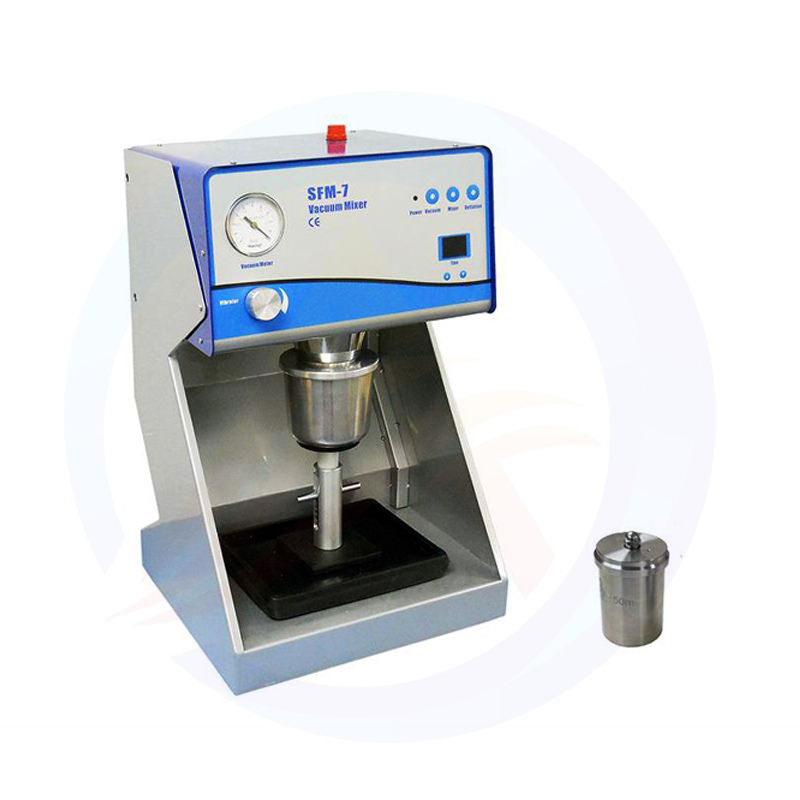
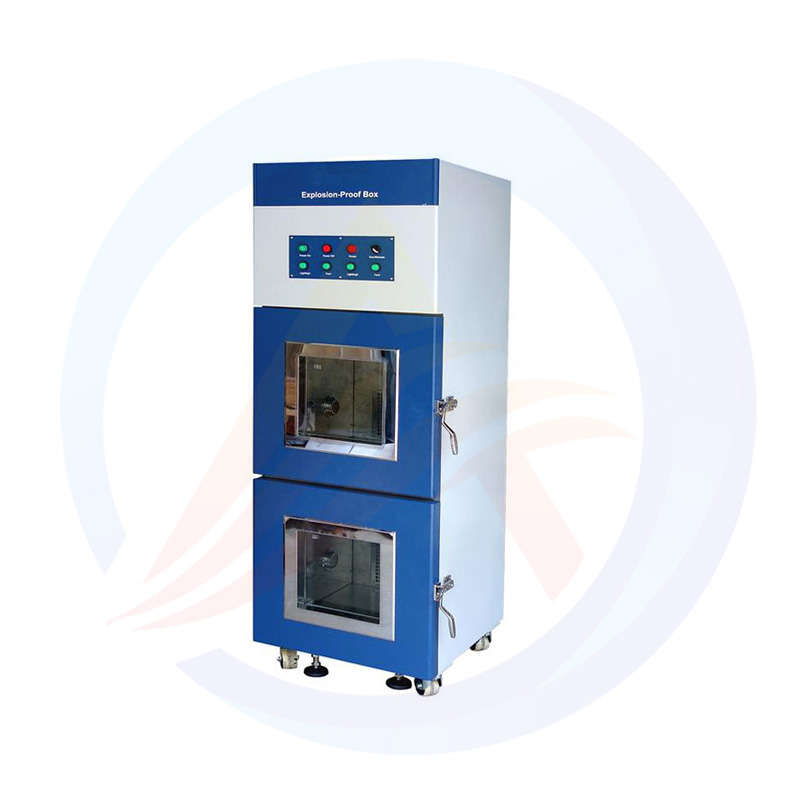
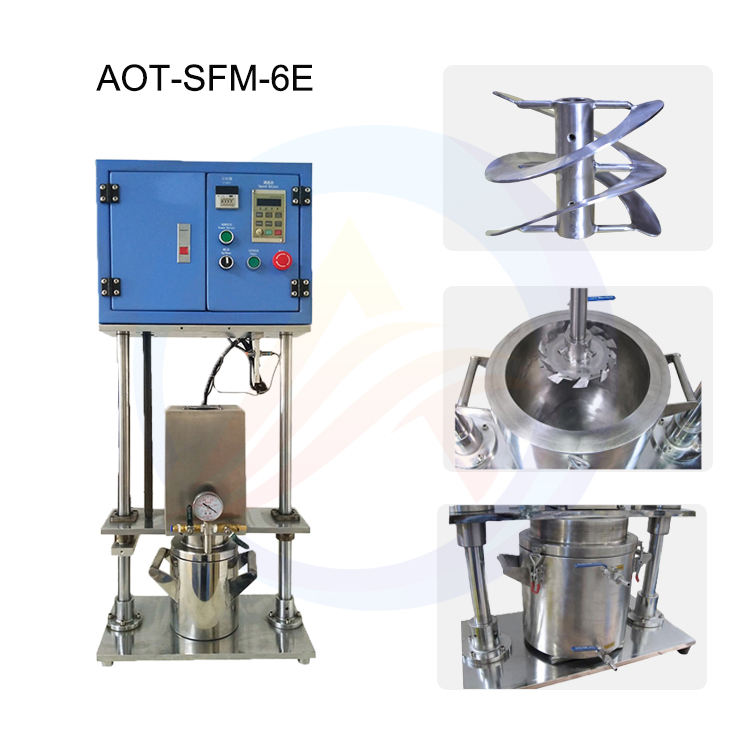
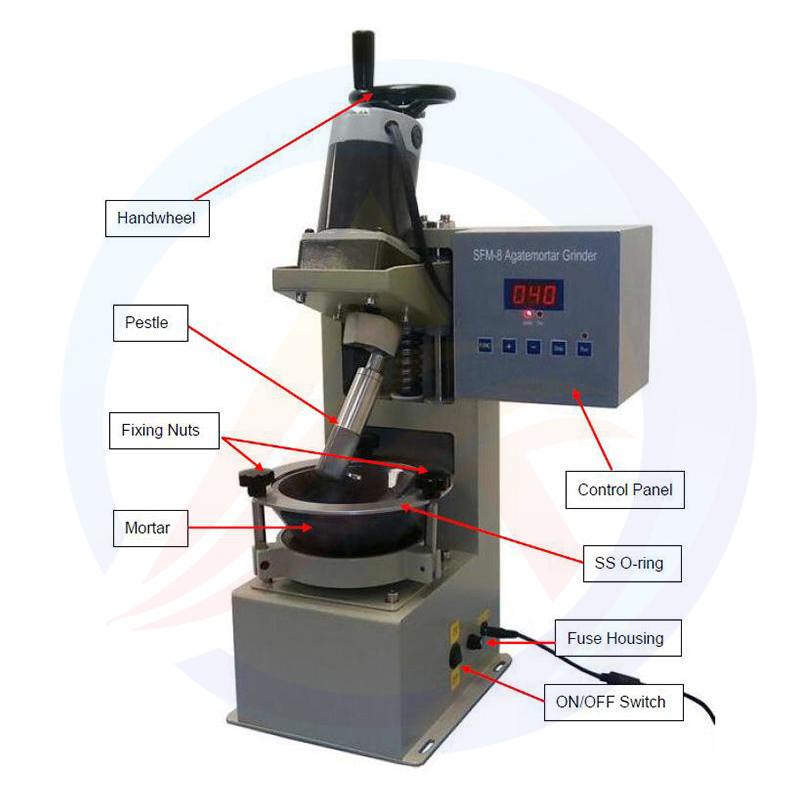

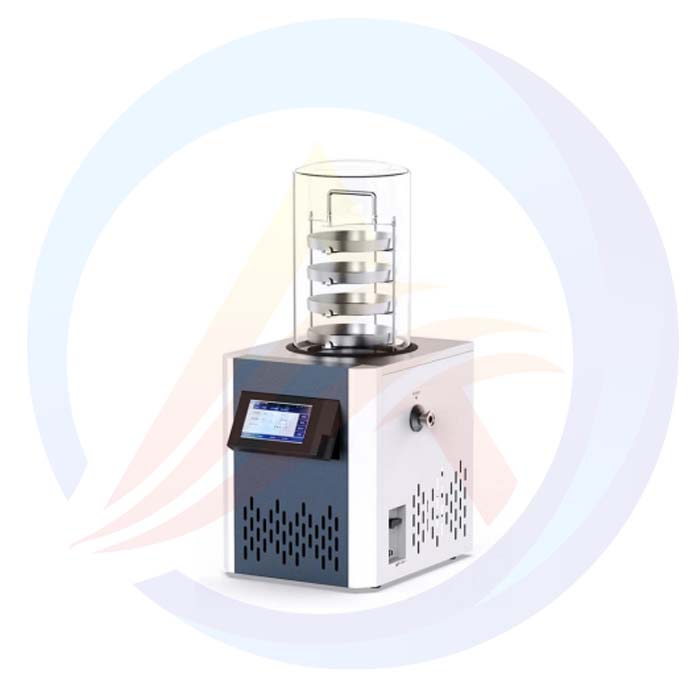
Battery performance—defined by energy density, cycle life, and safety—relies heavily on the uniform dispersion of materials and homogeneous mixing of components throughout the fabrication process. Laboratory centrifugal mixers, a cornerstone of battery R&D and small-batch production, combine centrifugal force with high-speed agitation to address critical challenges in material processing. Unlike conventional stirrers that often leave agglomerates or uneven distributions, these specialized machines ensure precise mixing of electrode slurries, electrolytes, and advanced materials (e.g., solid electrolytes, composite electrodes), directly impacting the electrochemical performance of lithium-ion, solid-state, and next-gen battery systems. This article explores the core applications, working principles, and transformative effects of centrifugal mixers in key battery fabrication stages.
Core Working Principle: Centrifugal Force Meets High-Speed Agitation
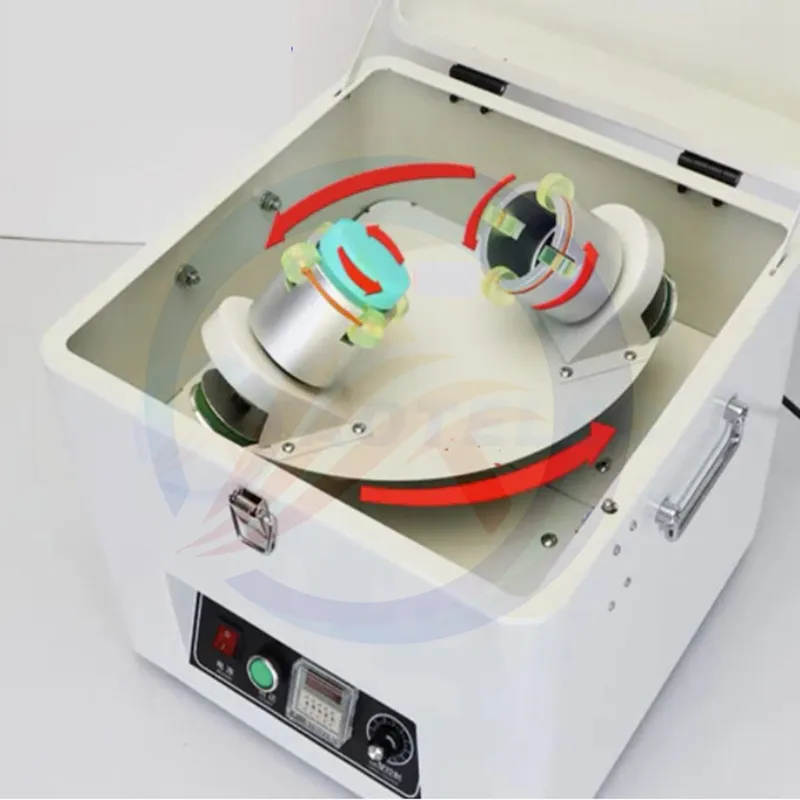
Laboratory centrifugal mixers operate on a dual-action mechanism that sets them apart from traditional mixing equipment:
Centrifugal Force: Rotating the mixing vessel at high speeds (typically 1,000–10,000 rpm) generates centrifugal force (100–1,000×g), pushing materials outward to eliminate air bubbles and ensure intimate contact between components.
Turbulent Agitation: Many models integrate planetary or orbital motion, creating shear forces that break down agglomerates of active materials (e.g., NMC particles, graphite flakes) or conductive additives (e.g., carbon black, graphene).
This synergy achieves two critical goals: complete dispersion (no clumping of solid particles) and degassing (removal of trapped air that causes voids in electrodes or electrolyte inhomogeneity). For battery materials—where even micron-scale agglomerates can block ion transport or create local hotspots—this level of mixing precision is non-negotiable.
Key Applications in Battery Fabrication
1. Electrode Slurry Preparation: The Foundation of High-Performance Electrodes
Electrode slurries (both cathode and anode) consist of active materials, conductive additives, binders, and solvents—their uniform mixing directly determines electrode conductivity, structural integrity, and electrochemical stability.
Cathode Slurries: Materials like lithium nickel manganese cobalt oxide (NMC), lithium iron phosphate (LFP), or sulfur require dispersion with conductive additives (e.g., Super P) and binders (e.g., PVDF, PAA). Centrifugal mixers break down agglomerates in NMC (typically 1–10 μm particle size) and ensure the conductive network is evenly distributed, reducing internal resistance. For LFP cathodes—prone to poor conductivity—this uniform dispersion boosts electron transport, increasing discharge capacity by 10–15% compared to conventionally mixed slurries.
Anode Slurries: Silicon-based anodes (with high theoretical capacity but severe volume expansion) benefit drastically from centrifugal mixing. The machine disperses silicon nanoparticles (50–200 nm) into graphite matrices, preventing clumping that causes electrode cracking. A 2024 study in Journal of Electrochemical Energy Conversion and Storage showed that centrifugally mixed silicon-graphite anodes retained 88% capacity after 500 cycles, versus 62% for manually mixed counterparts.
Degassing Advantage: Slurries mixed via centrifugal force have <0.5% void content, eliminating air pockets that lead to uneven coating during electrode casting and reducing the risk of short circuits in finished cells.
2. Electrolyte and Additive Homogenization
Electrolytes—liquid or gel—require precise mixing of lithium salts (e.g., LiPF₆, LiTFSI), solvents (e.g., EC, DMC), and functional additives (e.g., vinylene carbonate, fluoroethylene carbonate) to optimize ion conductivity and SEI (solid electrolyte interphase) formation.
Centrifugal mixers excel at dissolving solid salts into organic solvents and dispersing trace additives (0.1–5 wt%) uniformly. Unlike magnetic stirrers that take hours to dissolve LiPF₆, centrifugal mixers complete the process in 10–20 minutes, with no salt precipitation. For gel electrolytes, the machine ensures even distribution of polymer matrices (e.g., PVDF-HFP) and ceramic fillers (e.g., Al₂O₃), maintaining consistent ionic conductivity (1–10 mS/cm) across the electrolyte volume. This uniformity is critical for preventing SEI instability and capacity fade in high-voltage batteries (4.5V+).
3. Solid-State Electrolyte (SSE) Dispersion
Solid-state batteries (SSBs) depend on homogeneous mixing of solid electrolytes (e.g., LLZO, LGPS) with electrodes to minimize interfacial resistance. Centrifugal mixers address two key challenges in SSE processing:
Dispersing Ceramic Electrolytes: Ceramic particles (1–5 μm) are prone to agglomeration, creating barriers to Li⁺ transport. Centrifugal mixing breaks these clusters, ensuring the SSE forms a continuous network between cathode and anode, reducing interfacial resistance by 30–50%.
Composite Electrolyte Fabrication: Mixing SSE particles with polymers (e.g., PEO) or conductive additives (e.g., carbon nanotubes) requires both dispersion and mechanical mixing to maintain structural flexibility. Centrifugal mixers achieve this balance, producing composite electrolytes with ionic conductivity up to 10⁻³ S/cm at room temperature—critical for commercializing SSBs.
4. Material Modification and Composite Synthesis
In advanced battery R&D, centrifugal mixers enable the synthesis of composite materials with tailored properties:
Coated Active Materials: For example, coating LFP particles with carbon to enhance conductivity requires uniform deposition of carbon precursors (e.g., glucose) via centrifugal mixing, followed by pyrolysis. The machine ensures a thin, consistent carbon layer (5–10 nm) that maximizes conductivity without reducing active material loading.
Hybrid Electrodes: Mixing two active materials (e.g., NMC + LFP for balanced energy and power) demands precise ratio control and dispersion. Centrifugal mixers maintain the target material ratio (e.g., 70:30 NMC:LFP) with ±1% accuracy, ensuring predictable battery performance.
Technical Parameters Shaping Mixing Efficacy
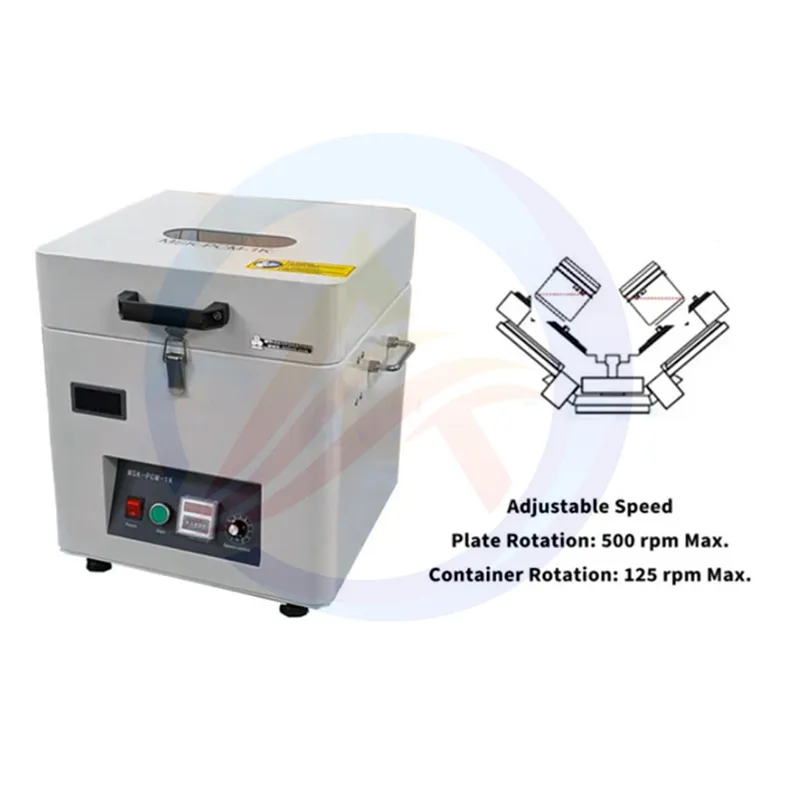
Laboratory centrifugal mixers’ performance is governed by key parameters that battery researchers optimize for specific materials:
Speed and Centrifugal Force: Higher speeds (5,000–10,000 rpm) generate greater shear force, ideal for dispersing nanomaterials (e.g., silicon nanoparticles, graphene). Lower speeds (1,000–3,000 rpm) are used for electrolyte mixing to avoid solvent evaporation.
Mixing Time: Typically 5–30 minutes, depending on material viscosity. Slurries with high solid content (60–70 wt%) require longer mixing to break agglomerates.
Vessel Design: Dual-wall or vacuum-sealed vessels prevent solvent evaporation and moisture absorption—critical for moisture-sensitive materials like Li metal or solid electrolytes.
Modern centrifugal mixers often feature digital controls (OLED displays, programmable speed profiles) and overload protection, as seen in models like the AOT-OS10 Pro, which offers precise speed adjustment (200–2,500 rpm) and torque control to handle high-viscosity slurries (up to 10,000 mPas).
Advantages Over Conventional Mixing Equipment
Compared to magnetic stirrers, planetary mixers, or ultrasonic homogenizers, centrifugal mixers offer unique benefits for battery fabrication:
Faster Mixing: Reduces processing time by 50–70%, accelerating R&D cycles and small-batch production.
Laboratory centrifugal mixers are indispensable tools in battery fabrication, where material uniformity is the foundation of performance and safety. From electrode slurries and electrolytes to solid-state electrolytes and composite materials, these machines ensure precise dispersion, degassing, and homogenization—directly enhancing battery energy density, cycle life, and reliability. As researchers push the boundaries of battery technology, centrifugal mixers will continue to evolve, offering smarter, more specialized solutions to address the challenges of next-gen energy storage. For battery labs and small-batch manufacturers, investing in a high-performance centrifugal mixer is not just a cost-saving measure—it’s a strategic step toward developing batteries that power the future of electrification.