
1、What is a Battery Ball Mixer?
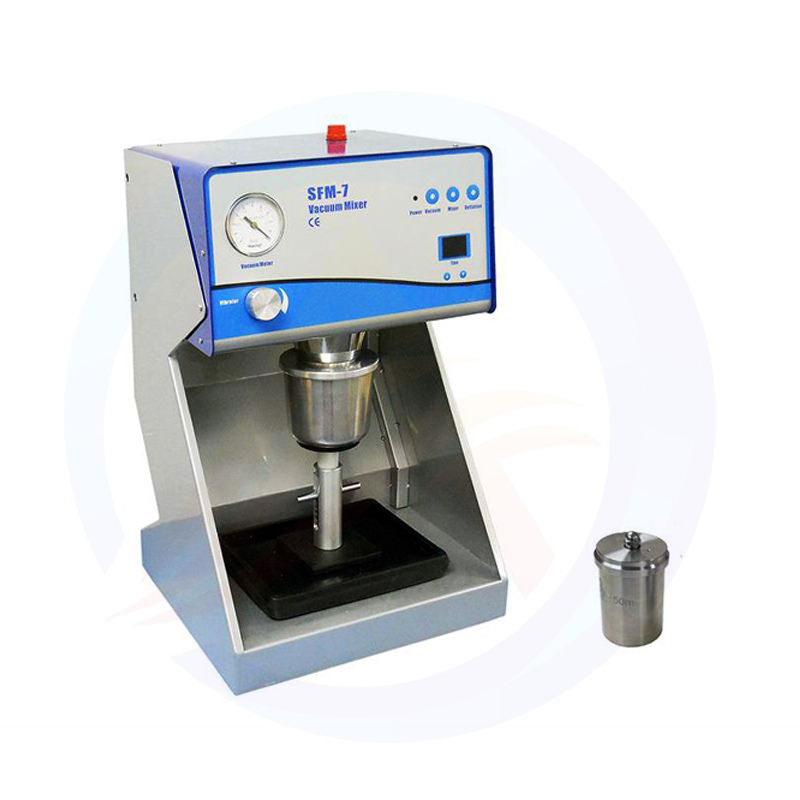
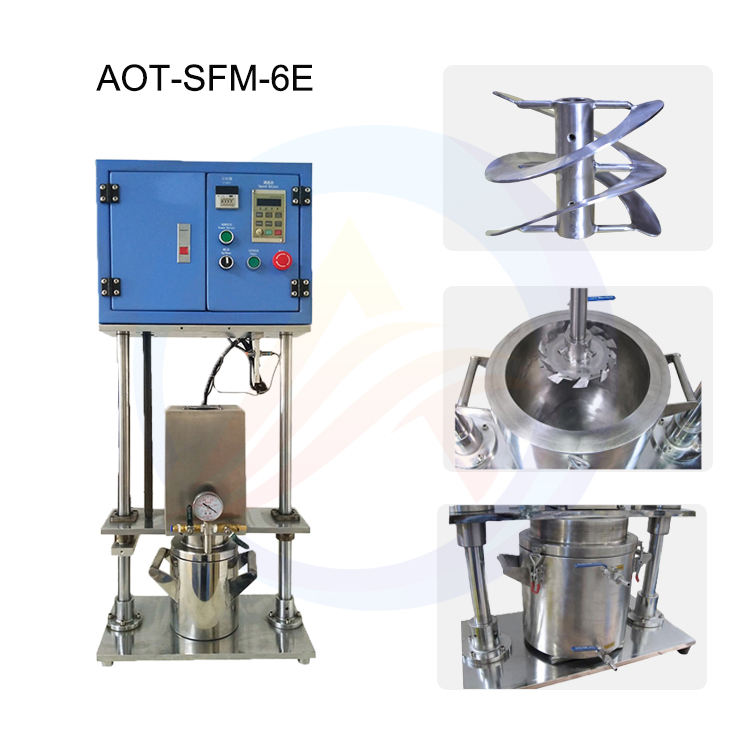
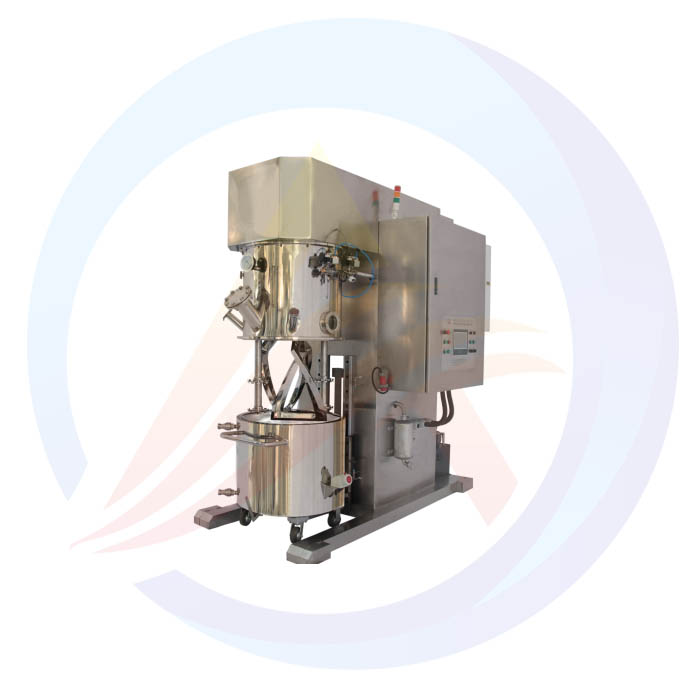
The Battery Ball Mixer is a core process equipment in the production of new energy batteries, specifically designed for the preparation of positive and negative electrode slurries for lithium batteries, sodium batteries and other types of chemical power sources. Through the combined effect of grinding balls' impact and stirring paddles' shearing, it achieves uniform dispersion of active materials, conductive agents, binders and solvents, breaks the agglomerated structure of raw materials, and forms a stable and uniform slurry system. Its application covers all types of batteries such as cylindrical, prismatic and pouch, and is compatible with 18650, 21700, 4680 cylindrical batteries, as well as different material systems such as ternary lithium, lithium iron phosphate and silicon-based anodes. It is a key link that determines the energy density, cycle life and safety performance of batteries, and is widely used in large-scale production and laboratory research and development in fields such as new energy vehicles, energy storage power stations and consumer electronics. Please provide the text you would like translated.
2、Core application scenarios: Verifying practical performance with real measurement data
High-quality Battery Ball Mixers need to maintain stable performance in diverse scenarios. The following presents the core advantages of the equipment through specific production cases and quantified data in a direct and intuitive manner: Please provide the text you would like translated.
(1) Large-scale mass production scenario: A leading new energy vehicle battery factory uses a 500L vacuum planetary ball mixer to continuously operate for 96 hours in a clean workshop with a temperature of 25℃ and a humidity of 40%, processing ternary NCM811 cathode slurry (solid content 62%). The stirring speed is stably maintained at 70r/min. The final slurry particle size distribution D50 is 4.2μm, with a uniformity error of no more than 2.5%. The daily production capacity reaches 3.6 tons, which is 50% higher than that of traditional double-shaft mixers. The slurry remains stable without stratification or sedimentation after standing for 48 hours. Please provide the text you would like translated.
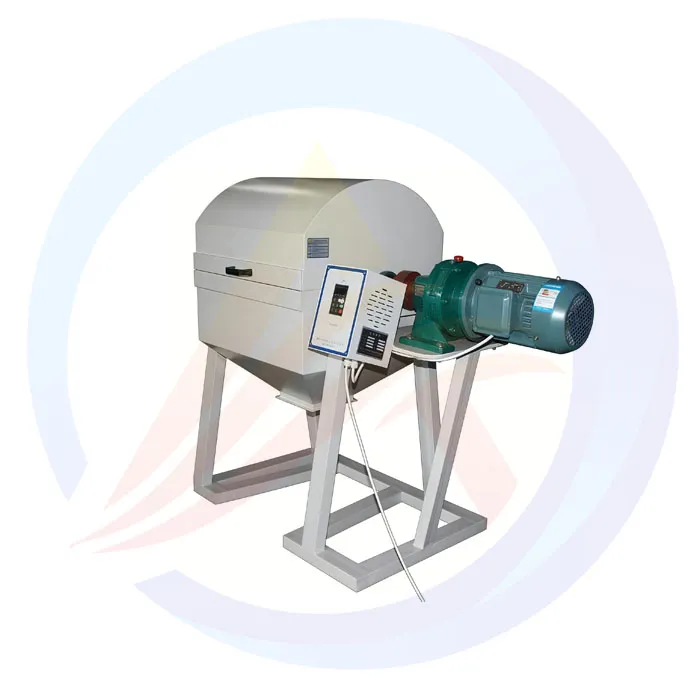
(2) High-viscosity material processing scenario: When energy storage battery enterprises produce silicon-carbon composite anode slurry (with a viscosity of 8000 mPa・s and a silicon content of 15%), they use customized dual-axis ball mixers. Through a high-speed shear paddle at 2200 rpm and a precise bucket wall gap of 3mm, the dispersion can be completed in just 60 minutes, which is 40% shorter than the mixing time of ordinary ball mills. The thickness deviation of the electrode coating is controlled within ±3μm, and the battery cycle life is increased by 20%. Please provide the text you would like translated.
(3) Multi-specification flexible production scenario: A consumer electronics battery factory needs to switch between the production of three cylindrical battery models, namely 18650, 21700, and 4680. By quickly replacing modular stirring paddles and adjusting the volume of the cavity (adjustable from 80L to 300L), the equipment can complete the specification conversion within 15 minutes, maintaining a mixing accuracy of ±2%. The scrap rate for small batch orders is controlled below 0.3%, meeting the daily production demand of 5,000 sets of different model slurries. Please provide the text you would like translated.
(4) Extreme environment operation scenarios: When producing lithium battery electrolyte and additive mixture systems in a -10℃ low-temperature workshop, the equipment adopts a constant-temperature heating jacket design, combined with low-temperature resistant sealing materials. The stirring speed is stably maintained at 50r/min. During the mixing process, there is no solvent solidification and no sealing leakage. The final slurry uniformity error is ≤ 3%, meeting the battery production requirements in high-latitude regions. Please provide the text you would like translated.
3、Frequently Asked Questions
Q: Why do the grinding balls in the ball mixer often break? How can this be solved? Please provide the text you would like translated.
A: The core reasons for the damage of grinding balls are: ① improper material selection (ordinary alumina balls have insufficient wear resistance); ② the slurry contains hard impurities (such as metal particles); ③ the stirring speed is too high, resulting in excessive impact force. Solutions: ① Use zirconia or silicon nitride grinding balls (hardness ≥ HRA90, service life ≥ 8000 hours); ② Install a 200-mesh filter screen at the feed inlet to remove hard impurities; ③ Adjust the speed according to the diameter of the grinding balls (for Φ10mm grinding balls, the speed should be controlled within 60r/min); ④ Regularly check the wear of the grinding balls and replace the balls with a diameter deviation of ≥ 0.5mm in a timely manner. Please provide the text you would like translated.
Q: There are too many bubbles in the mixed slurry, which affects the quality of the electrode coating. How can this be solved? Please provide the text you would like translated.
A: Reasons for excessive bubbles in the slurry: ① Air is drawn in during the mixing process; ② Bubbles are produced due to solvent evaporation; ③ The slurry viscosity is too high, making it difficult for bubbles to escape. Solutions: ① Use a vacuum planetary ball mixer (with a vacuum degree of ≤ -0.095 MPa) to mix under negative pressure; ② Add the solvent in stages to avoid adding a large amount at once; ③ Reduce the solid content of the slurry (control it at 55% - 65%), or add 0.1% - 0.3% defoamer (such as silicone-based); ④ After mixing, let it stand in a vacuum tank for 30 minutes to remove residual bubbles. Please provide the text you would like translated.
Q: What are the differences in operation and maintenance between small-capacity ball mixers used in laboratories and large-capacity industrial equipment? Please provide the text you would like translated.
A: Key points for operation and maintenance of laboratory models (5L - 50L): ① Thoroughly clean the chamber and stirring paddles after each use to prevent cross-contamination of different slurries; ② Frequent parameter adjustments are required, and the speed, time, and temperature data of each experiment should be recorded for formula optimization; ③ Short maintenance cycle (check the seals every 300 hours), and the grinding balls need to be regularly screened (remove broken balls). Key points for operation and maintenance of industrial models (100L - 1000L): ① Must be integrated with the production line's automated control system, and set fixed process parameters (speed, time, vacuum degree); ② Long maintenance cycle (check the transmission system and seals every 1000 hours); ③ Regularly change the lubricating oil (every 500 hours), and perform dynamic balance calibration on the motor; ④ Equip with a dedicated inventory of consumable parts (stirring paddles, seals, grinding balls) to ensure continuous production. Please provide the text you would like translated.
Q: The Battery Ball Mixer has a high energy consumption. How can we reduce the operating cost? Please provide the text you would like translated.
A: Core solutions for reducing energy consumption: ① Adjust the rotational speed based on the viscosity of the slurry (use the "low-speed premixing + high-speed dispersion" mode for high-viscosity slurries to avoid running at high speed throughout the process); ② Select first-class energy efficiency motors (which consume 15% to 20% less energy than ordinary motors); ③ Plan production batches reasonably to avoid idle operation of equipment; ④ Regularly clean the equipment's heat dissipation system to ensure good heat dissipation of the motor and reduce energy consumption; ⑤ Adopt a variable frequency control system to adjust the motor's rotational speed according to production needs and reduce operating power during off-peak hours. Please provide the text you would like translated.
Q: How to determine if the mixing effect of the ball mixer meets the standard? What are the detection methods? Please provide the text you would like translated.
A: The criteria and methods for judging the achievement of the mixing effect: ① Particle size distribution detection (using a laser particle size analyzer, with requirements of D50 ≤ 5μm and D90 ≤ 10μm); ② Uniformity detection (taking samples from the top, middle and bottom of the slurry, with the solid content deviation ≤ 1%); ③ Viscosity detection (using a rotational viscometer, with the viscosity deviation of the same batch of slurry ≤ 5%); ④ Electrode coating detection (coating thickness deviation ≤ ±3μm, no particle agglomeration or bubble defects); ⑤ Battery performance detection (the capacity deviation of the fabricated battery ≤ 2%, cycle life ≥ 1500 times). Please provide the text you would like translated.
The Battery Ball Mixer, as a core piece of equipment in battery production, directly determines the core competitiveness of battery products in terms of its mixing accuracy, stability and adaptability. When enterprises are selecting models, they need to combine their own product types (cylindrical / square / pouch), production capacity scale (laboratory / medium batch / large scale), slurry characteristics (viscosity, solid content, material system) and compliance requirements of the target market. By making multi-dimensional comparisons of equipment types and supplier strength, they can choose a high cost-performance solution. At the same time, by standardizing operation procedures, conducting regular maintenance and optimization of process parameters, the operational efficiency of the equipment can be effectively enhanced, its service life prolonged and production costs reduced.