

Pouch-type lithium-ion batteries have become the dominant energy storage solution in consumer electronics, electric vehicles, energy storage systems, and portable power devices due to their high energy density, flexible form factor, and excellent safety performance. As a core component connecting the internal electrode system and the external circuit, the tab plays an irreplaceable role in determining the electrical performance, thermal stability, sealing reliability, and service life of pouch cells. The design and selection of tabs with different materials, dimensions, structures, and processing characteristics directly affect the charging and discharging efficiency, internal resistance, heat generation, and structural integrity of the battery. This article systematically analyzes the application scenarios and functional mechanisms of pouch cell tabs with various specifications in practical engineering.
In terms of material specification, tabs are mainly divided into aluminum tabs and nickel-coated copper or nickel tabs, corresponding to the cathode and anode of lithium-ion batteries respectively. Cathode tabs are usually made of high-purity aluminum (1060/1100 series), which has good electrical conductivity, low electrochemical corrosion tendency in the cathode potential range, and stable compatibility with the electrolyte. Anode tabs are mostly made of pure nickel or nickel-copper composite materials to match the copper foil current collector of the anode, improving weldability and avoiding contact corrosion. In high-rate and high-capacity cells, transition tabs (aluminum-nickel composite structure) are often used to balance conductivity, welding strength, and sealing stability. Material selection is the most basic specification division, which determines the electrical matching, corrosion resistance, and processing performance of the tab in the cell system.
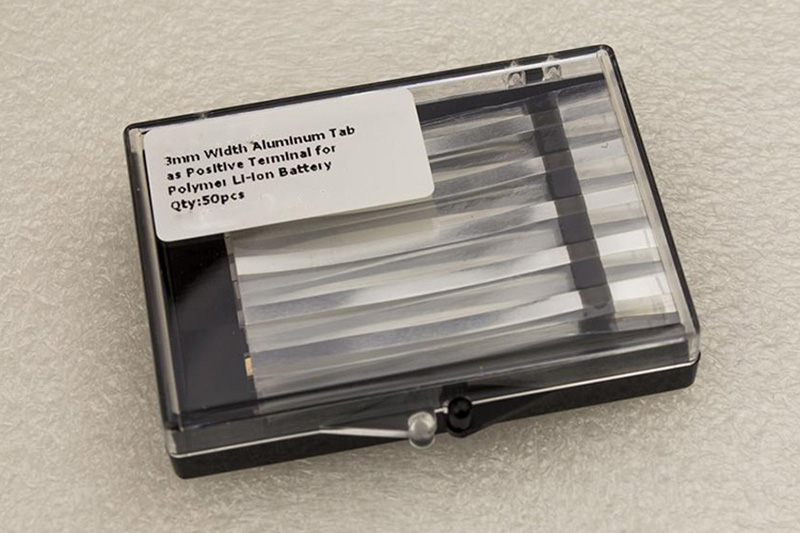
Dimension specification is another key classification basis for tabs, including thickness, width, and length. The thickness of conventional tabs is mostly 0.1 mm, 0.15 mm, and 0.2 mm. Thin tabs (0.1 mm) are suitable for small and medium-capacity cells used in mobile phones, watches, and Bluetooth headsets, with good flexibility and less space occupation. Thick tabs (0.15–0.2 mm) are used in high-power cells such as power tools and electric vehicle batteries to withstand large charge-discharge currents and reduce current density and heat generation. The width of tabs ranges from 2 mm to 50 mm or more. Narrow tabs (2–6 mm) are used in low-current compact cells; wide tabs (10–30 mm) are used in high-capacity and high-rate cells to reduce resistance and improve heat dissipation. The length of the tab is customized according to the packaging structure and module assembly requirements, which affects the insulation layout, bending process, and connection efficiency in the battery pack.
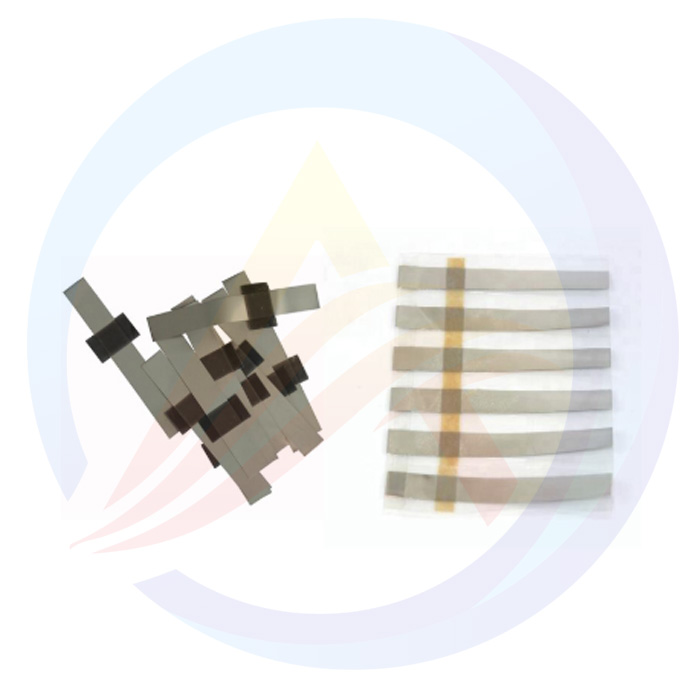
Structural specification mainly refers to the design of the sealing layer and the conductive part of the tab, as well as single-tab, double-tab, or multi-tab configuration. The tab is composed of a metal conductive body and a layer of high-temperature resistant insulating sealing film. The sealing film must be compatible with the aluminum-plastic film of the pouch cell to ensure reliable heat-sealing and prevent electrolyte leakage and air infiltration. In high-capacity and high-power cells, the double-tab or multi-tab structure is widely used. By increasing the number of tabs, the current per tab is reduced, the internal resistance of the cell is reduced, the temperature distribution is more uniform, and the ability of rapid charge and discharge is improved. This structural design has become a standard configuration in automotive power batteries.
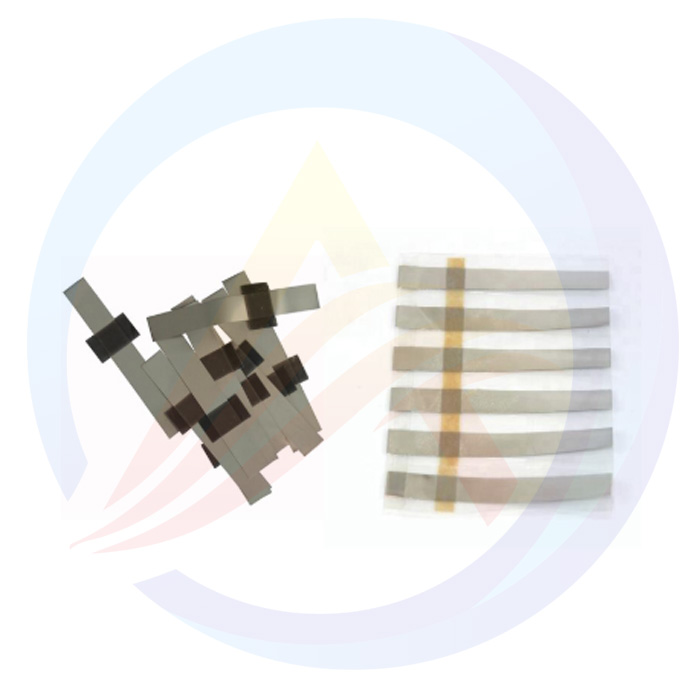
The core functions of tabs with different specifications can be summarized into four aspects: electrical conduction, reliable sealing, heat dissipation management, and structural support. First, tabs undertake the transmission of charge and current between the internal electrode and the external circuit. Reasonable selection of material and dimension can reduce ohmic resistance, improve energy efficiency, and reduce voltage drop. Second, the tab sealing area forms a closed environment inside the cell through hot pressing with the pouch shell, isolating moisture and air and protecting the stability of the electrode and electrolyte system. Third, as the main heat conduction path of the cell, tabs with appropriate size and structure can quickly export the heat generated inside the cell, suppress thermal runaway risk, and improve cycle life. Fourth, tabs provide mechanical connection points for cell assembly and series-parallel connection in the module, and their strength and toughness determine the shock resistance and vibration resistance of the battery system.
In practical applications, the selection of tab specifications is highly matched with the application scenarios. For small consumer electronic cells, thin, narrow, and single-tab structures are preferred to achieve lightweight and miniaturization. For power batteries for electric vehicles, thick, wide, nickel-coated or composite tabs with double-tab or multi-tab structures are used to meet high-rate, long-cycle, and high-safety requirements. For energy storage cells, tab specifications focus on stability, low resistance, and long-term durability to ensure low self-discharge and high reliability. In the manufacturing process, different tab specifications also correspond to different welding processes (ultrasonic welding, laser welding) and heat-sealing parameters, which affect production efficiency and yield.
Pouch cell tabs are not simple conductive parts, but key components that integrate electrical, thermal, mechanical, and sealing functions. The differentiation of material, dimension, and structure forms tabs with different specifications, which are adapted to cells of different capacity, rate, and application scenarios. Correct selection and design of tabs can effectively reduce internal resistance, improve heat dissipation, enhance sealing stability, and extend the service life of the battery. With the continuous development of lithium-ion battery technology toward higher energy density and higher power, the specification optimization and functional innovation of tabs will continue to be an important direction in battery design and manufacturing.