

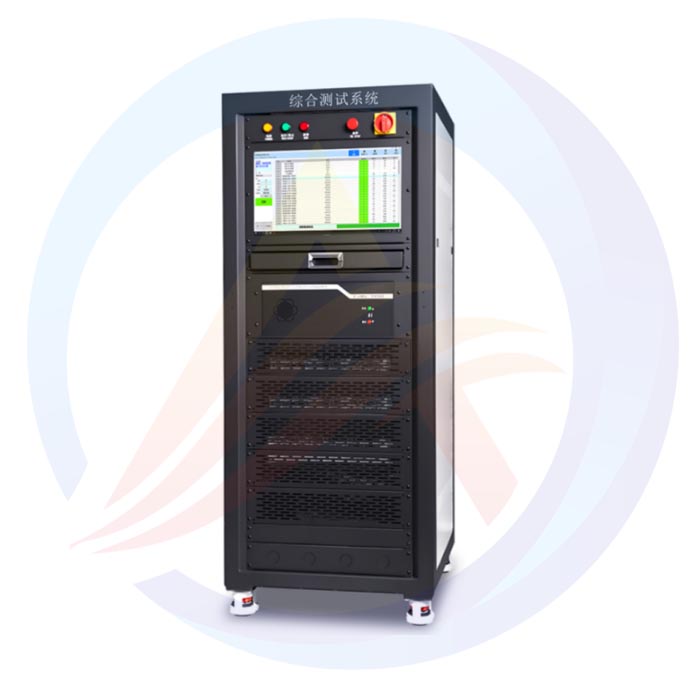
In the global surge of lithium‑ion battery manufacturing, pouch cells have become a mainstream design for consumer electronics, electric vehicles, energy storage systems, and portable power devices due to their lightweight structure, high energy density, flexible form factor, and improved safety profile. Among the core production equipment for pouch cells, the pouch cell sealing machine stands as a critical piece that directly determines sealing quality, production yield, cell safety, and service life. This article systematically elaborates on the operational procedures, functional applications, working principles, and performance advantages of pouch cell sealing machines, highlighting their irreplaceable role in modern battery manufacturing.
Pouch cell sealing machines are specialized industrial devices designed to permanently bond the edges of aluminum‑plastic laminated films under controlled conditions of vacuum, heat, and pressure. Unlike ordinary plastic sealing equipment, these machines integrate precision mechanical transmission, digital temperature control, closed‑loop pressure regulation, real‑time parameter monitoring, and automated positioning systems to achieve consistent, reliable, and airtight seals for lithium‑ion pouch cells. The primary packaging material—aluminum‑plastic film—consists of a nylon layer, aluminum foil layer, and polypropylene (PP) heat‑sealing layer. The PP layer melts and fuses under appropriate temperature and pressure, creating a robust barrier that prevents electrolyte leakage, blocks moisture and air intrusion, and maintains internal electrochemical stability.
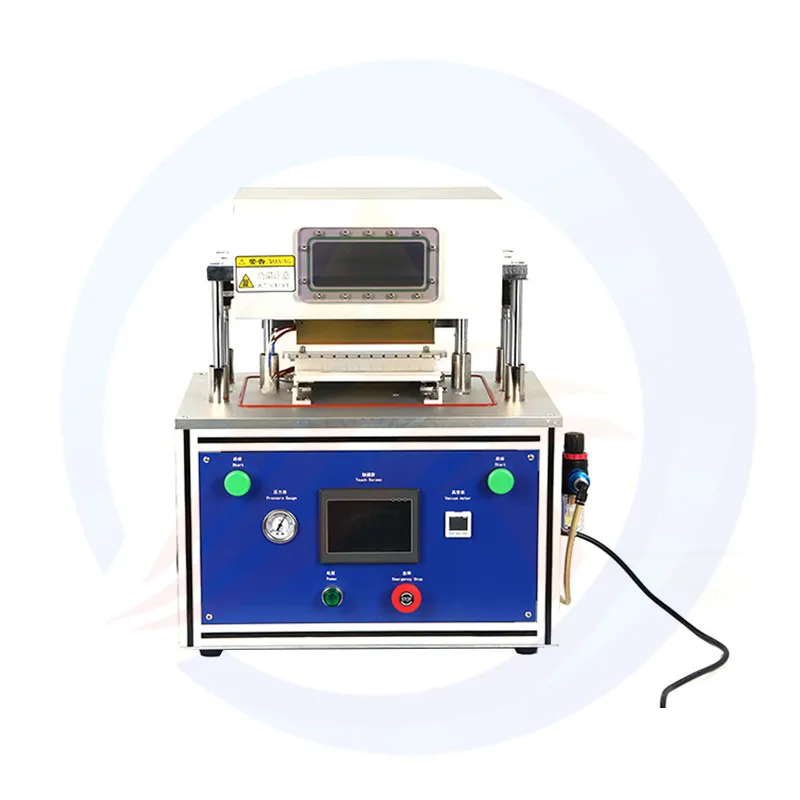
The working principle of pouch cell sealing machines centers on thermal fusion bonding combined with vacuum extraction. During operation, resistance heating elements rapidly heat the upper and lower copper sealing heads to a preset temperature, typically between 160°C and 200°C, with precision controlled within ±1.5°C via PID algorithms. Once the target temperature is reached, the pouch cell is positioned on a dedicated fixture and fed into the sealing zone. The chamber then performs vacuum pumping to remove residual air, moisture, and volatile gases from inside the pouch, effectively avoiding oxidation, bulging, and internal short circuits. Under set pressure—usually 0.2 to 0.8 MPa—the heated sealing heads press the film edges together. The PP layer softens, melts, and molecularly interdiffuses; after a defined holding time, the heads release, and the seal cools and solidifies, forming a permanent, uniform bond. This integrated vacuum‑thermal‑pressure mechanism ensures high sealing strength, minimal thermal damage to internal components, and consistent production quality.
In terms of operational procedures, modern pouch cell sealing machines support both semi‑automatic and fully automatic modes to adapt to laboratory R&D and mass production lines. For semi‑automatic operation, operators manually place cells into fixtures, activate the cycle via foot switch or touch panel, and the machine automatically executes vacuuming, heating, pressing, holding, pressure relief, and head return. Fully automatic models integrate conveyor lines, robotic loading/unloading, visual positioning, and online inspection to achieve continuous, unmanned production. Key process parameters—temperature, pressure, vacuum level, sealing time, and cooling duration—are adjustable via a human‑machine interface (HMI), allowing flexible adaptation to different cell sizes, film thicknesses, and production requirements. Many machines also feature multi‑station turntable or linear designs to perform top sealing, side sealing, edge trimming, and gas deflation in one pass, significantly boosting efficiency.
The core applications of pouch cell sealing machines cover the entire pouch cell manufacturing chain, including pre‑sealing, final sealing, secondary sealing after formation, and post‑testing packaging. In the early stage, side sealing and pre‑top‑sealing shape the pouch and reserve a port for electrolyte injection. After electrolyte filling and formation, the final vacuum sealing removes excess gas and permanently seals the cell, ensuring long‑term stability. Secondary sealing further reinforces the seal edge to prevent micro‑leakage caused by thermal expansion and contraction during cycling. The equipment is widely used in consumer electronics (smartphones, tablets, laptops), electric vehicles (power batteries), energy storage systems, medical devices, wearable electronics, and military batteries. It supports various pouch cell designs, from small‑capacity thin cells to high‑power thick EV cells, demonstrating strong versatility and compatibility.
The performance benefits of advanced pouch cell sealing machines are remarkable and directly enhance battery competitiveness. First, they deliver excellent sealing quality: uniform temperature distribution and stable pressure eliminate weak bonds, pinholes, and wrinkles, drastically reducing leakage and rejection rates. Second, vacuum integration preserves electrochemical performance by removing air and moisture, extending cycle life and improving safety. Third, precision controllability ensures repeatability and consistency across mass production, critical for automotive and energy‑storage grade batteries. Fourth, high efficiency—with advanced models reaching 15–20 PPM—supports high‑volume manufacturing while lowering labor costs. Fifth, structural versatility allows quick mold changes or tool‑less switching between top and side sealing, shortening product changeover time. Sixth, safety and reliability are enhanced with over‑temperature alarms, emergency stop, pressure protection, and anti‑scald design, complying with industrial safety standards.
With the rapid development of solid‑state batteries, new energy vehicles, and flexible electronics, pouch cell sealing machines are evolving toward higher precision, intelligence, and integration. Upgraded models feature real‑time data logging, remote monitoring, AI‑based parameter optimization, and adaptive control to accommodate solid‑state electrolyte systems and ultra‑thin laminated films. These innovations further improve sealing stability, reduce defect rates, and support the next generation of high‑safety, long‑life batteries.
The pouch cell sealing machine is a cornerstone of lithium‑ion pouch cell manufacturing. By unifying vacuum, heat, and pressure under precise digital control, it achieves strong, airtight, and consistent seals that underpin battery performance, safety, and durability. Its wide application across consumer electronics, EVs, and energy storage reflects its industrial importance. As battery technology advances, sealing machines will continue to upgrade toward smarter, more efficient, and more adaptable solutions, providing solid technical support for the global new energy industry.